Congestion in high-velocity zones
Reduces your throughput when it matters most

Infios AI within Infios Warehouse Management (WM) continuously analyzes your pick frequency, velocity and product affinity data to recommend and execute location reassignments that keep your warehouse slotting aligned with operations. Your throughput and space utilization improve without capital investment, added headcount or new automation.
Poor slotting rarely fails as a single visible event. It accumulates as travel time added to thousands of your picks a day, congestion in high-velocity zones and storage capacity that sits underused while other zones run tight. Your warehouse was probably slotted once at go-live and rarely reviewed again as product velocity shifts with seasons, promotions and stock keeping unit (SKU) expansion.
Warehouse slotting with artificial intelligence (AI) turns a periodic engineering project into an ongoing evolution, keeping your location assignments aligned with your warehouse operations.
Warehouse slotting is not static. Product velocity changes with seasons, promotions, SKU expansion and demand shifts. New products are often assigned to whatever location is available. A layout that was effective at go-live can gradually drift away from how your warehouse operates.
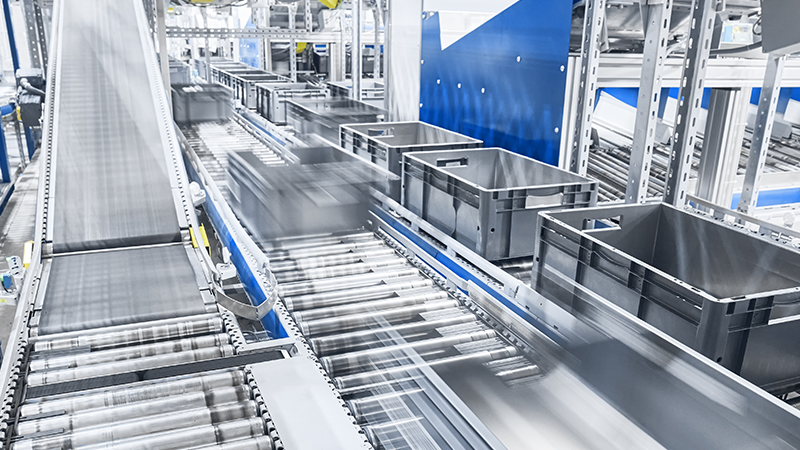
Warehouse teams know the difficult part of slotting: keeping location assignments aligned with a constantly changing operation.
Your product velocity profiles shift with seasonal demand, promotions and range changes, but your slot assignments rarely change at the same pace. New SKUs can end up outside the most efficient pick path. High-velocity products can create bottlenecks in congested areas, while slow-moving stock occupies valuable primary pick-face positions.
Product affinity creates another hidden opportunity. Items that are frequently ordered together may be stored in different zones, creating unnecessary travel and multi-zone picks. These relationships can be difficult to identify manually across thousands of your SKUs.
Operative travel time commonly accounts for 50–70 percent of pick labor time in traditionally slotted warehouses, according to manual warehouse research. Every avoidable step is throughput your facility never recovers.
Fulfillment and inventory teams absorb the friction of a misaligned layout:
Reduces your throughput when it matters most
With your dense zones operating next to underutilized ones
For regularly recurring product purchases increase travel time and slow your fulfillment
Your engineering time can't scale to the pace of underlying data changes, making manual analysis impossible to sustain for pick frequency, velocity and product affinity across thousands of SKUs. Your industrial engineers spend their time trying to keep up instead of focusing on higher-value analysis.
Infios AI handles the continuous, data-intensive analysis that manual slotting reviews can't sustain, working as an ongoing capability inside your warehouse management environment.
AI analyzes how your warehouse operates, identifies opportunities to improve location assignments and helps your team prioritize changes based on their expected operational impact. Operating within your warehouse management environment, inventory slotting optimization recommendations connect directly to the work required to implement them.
Infios AI analyzes your pick frequency data and changing velocity profiles to provide Warehouse Management System (WMS) slotting recommendations for location assignments. Fast-moving products can shift toward primary pick-face positions as demand changes, helping your team respond before congestion and unnecessary travel become established.
Product affinity often hides in plain sight. Infios AI identifies SKUs that are frequently picked together in your warehouse and recommends co-location opportunities. Placing high-affinity products closer together reduces travel and the number of multi-zone picks required to complete an order.
Storage density varies more than most teams realize. Infios AI analyzes storage density across your warehouse zones and identifies areas that are underused or approaching capacity. This helps your team evaluate opportunities to rebalance existing capacity rather than treating additional space as the only answer.
High pick demand creates bottlenecks in specific location clusters, particularly during peak periods. Bottlenecks are predictable if you're watching the right signals. Infios AI flags where demand is likely to create congestion, before it hits. Your fulfillment and inventory management teams can act on slot changes before congestion hits and throughput takes the loss.
Not every recommended move delivers the same value, and physical changes can disrupt your live operations. Infios AI models the expected impact of proposed slot changes before moves are executed, helping your team understand potential throughput effects and letting your operations directors prioritize changes based on return before committing resources.
Approved recommendations are translated into directed pick-face move instructions within Infios WM. Your warehouse managers retain approval over significant changes while recommendations are connected to the work required for implementation. The gap closes between knowing what should change and changing it.
Slotting stops being a static setup decision and becomes a capability that keeps pace with daily operating conditions without ceding control over significant change before it is executed.
Throughput gains from existing infrastructure. No additional capital investment, headcount or automation required.
Continuous analysis of velocity, pick frequency and product affinity across the full SKU base removes work that manual review could never sustain at the pace of the underlying data changes, freeing up more engineering time for higher-value analysis.
Co-location and congestion prediction reduce the operational friction that builds up silently between periodic reviews, before it shows up as missed throughput targets.
Measure your slot optimization through operational outcomes.
Key performance indicators (KPIs) for your warehouse include:
Average travel distance or time per pick: Measure how much movement is required to fulfill your picks.
Picks per operative hour: Know whether improved slotting is translating into higher labor productivity.
Percentage of picks from primary pick-face positions: Understand whether high-velocity demand is supported by appropriate locations.
Multi-zone pick rate: Measure how often your orders require movement across multiple zones.
Peak-period congestion events: Track bottlenecks in high-velocity areas when demand is highest.
Storage utilization by zone: Recognize whether your available warehouse capacity is being used effectively.
These measures also help your warehouse managers, operations directors, industrial engineers and fulfillment teams establish a baseline, identify the highest-value opportunities and track whether slotting changes are delivering the intended improvement.

AI doesn't replace your team's judgment on significant changes. It operationalizes it at scale.
As your slotting shifts from a periodic review to a real-time capability, oversight doesn't shift to automation by default. Infios AI surfaces recommendations, models their expected impact and prioritizes what needs action.
For significant rebalancing, your warehouse planners decide which changes to commit to and when. Your layout keeps pace with how your operation is running, while important decisions stay with the team that knows the operation best.
See how Infios AI makes slotting optimization a capability within your Infios WM environment.
Inventory slotting optimization is the process of determining where products should be stored in a warehouse to support efficient picking, storage utilization and throughput. AI-driven slotting analyzes factors such as product velocity, pick frequency and product affinity so location assignments can adapt as warehouse conditions change.
Fulfillment and inventory teams see the effects as reduced travel and fewer multi-zone picks, as co-location and congestion prediction address friction before it affects a shift. Slot moves themselves are scheduled for low-demand periods, so day-to-day picking work isn't disrupted by the optimization process running behind it.
Product affinity describes products that are frequently picked together. Identifying these relationships can help warehouse teams consider co-locating products to reduce travel and multi-zone picking. AI can identify affinity patterns across large SKU populations that may be difficult to identify through manual analysis.
Warehouse space utilization measures how effectively available storage capacity is being used. AI-driven space utilization analysis can identify differences in storage density between zones and help warehouse teams evaluate opportunities to rebalance existing capacity.
Infios AI operates within the Infios WM environment. It can analyze velocity, pick frequency and product affinity, help identify and prioritize potential slot changes, assess their likely impact and connect approved recommendations to warehouse execution. Inventory slotting becomes a continuous capability rather than a standalone analysis exercise.