

Supply chain execution readiness report

Supply chain execution is under more pressure than at any point in the last decade. Here’s what supply chain leaders told us about what’s breaking and what’s not.

Infios HEADER 2543X1494 Copy
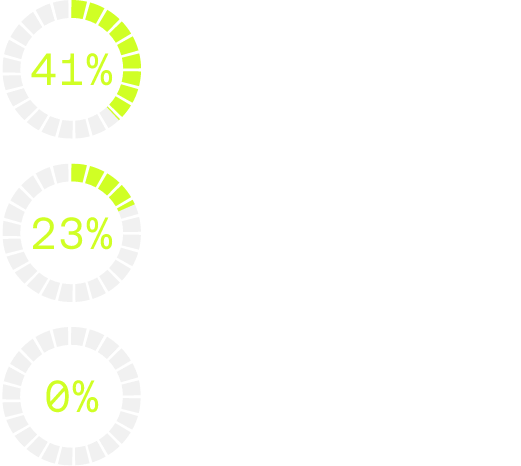
  • 79 %
    OF SUPPLY CHAIN LEADERS

    say execution speed, not planning, is now the primary source of competitive advantage

  • 20 %
    OF SUPPLY CHAIN LEADERS

    have real-time, end-to-end visibility across their supply chain

  • 0 %
    OF SUPPLY CHAIN LEADERS

    have fully integrated generative or agentic AI across their supply chain execution

Report Spread 1

The execution gap is real and it’s getting harder to ignore

For most organizations, the systems running day-to-day supply chain operations were built to record activity — not act on it. That gap between ambition and legacy systems is where disruptions live, AI stalls and competitive advantage slips.

58 Perecnt Copy
The Execution Edge

79%

say execution speed now drives advantage ahead of planning, inventory optimization and cost management

It’s no longer about better plans. It’s about faster, smarter execution across order, warehouse and transportation.

58 Percent
stuck on manual

58%

cite manual intervention as their #1 source of inefficiency ahead of technology limitations, data fragmentation and misaligned inventory

Only 20% have real-time, end-to-end visibility, meaning 80% are making execution calls on information that’s already out of date.

LEGACY ARCHITECTURE

There isn’t a budget problem.
Legacy systems are the blockers.

It’s not about willingness to invest. It’s about whether current systems can support the execution model leaders actually need. Legacy debt, integration complexity and budget constraints are symptoms of the same root problem.

Group 62
Group 74
AI ADOPTION VS IMPACT

AI adoption is universal. AI impact is not.


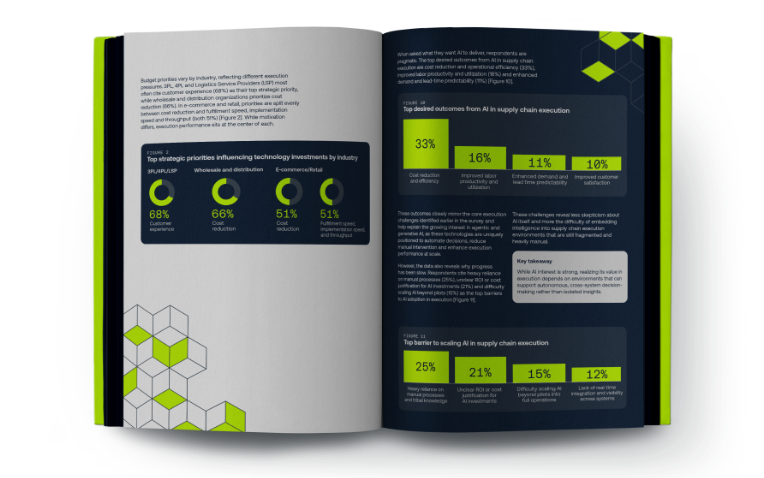
AI isn’t the problem. The environment is. Fragmented systems, manual workflows and unclear ROI are what’s blocking progress, not skepticism about the technology. And what leaders expect in return makes the stakes clear: cost reduction, labor productivity, better predictability. Execution outcomes, not analytics outputs.

“The next phase of supply chain advantage will not come from better visibility alone — but from the ability to move from systems that record activity to systems that act, coordinating execution end to end and embedding intelligence at the point of action.”

Richard Stewart
Richard Stewart
EVP, Product and Industry Strategy, Infios

Three steps toward intelligent, connected execution

The gap between ambition and impact is a technology problem. Here’s how to start closing it.

Prioritize interoperable systems over rip-and-replace

Look for execution solutions that integrate with existing OMS, WMS and TMS environments and scale incrementally. Modular, interoperable architectures let you scale without disrupting what already works.

Start applying AI within execution workflows now

Waiting for perfectly clean data will only widen the gap. Value from AI comes from applying it directly within execution, where systems learn and adapt over time. Early use tells you which data actually matters most.

Look for AI built for execution, not experimentation pilots

Look for proven solutions that operate across order, warehouse and transportation at scale. Point solutions, bolt-ons and embedded intelligence are not the same thing.

Footer CTA

Download the full report